Last updated: October 29, 2026
Key Takeaways
- Call a licensed electrician when the problem is active, repeats, or involves heat, smell, or visible damage.
- A burning smell often means heat is building where you cannot see it.
- Repeated breaker trips under normal use mean the circuit needs attention.
- Try basic troubleshooting only when the symptom is mild, isolated, and not linked to heat, smoke, or repeat failure.
If you smell burning, see sparks, or have an outlet or breaker that keeps acting up, call a licensed electrician instead of trying to patch it yourself. This guide on signs you need an electrician instead of DIY fix focuses on the warning signs that call for help, not a quick repair. Some electrical problems are simple nuisance fixes; others point to heat, loose connections, or old wiring that can turn into fire damage fast. The U.S. Consumer Product Safety Commission reports that home electrical failures are a leading cause of residential fires, which is why the first step is to stop and assess.
The warning signs that mean “stop and call”
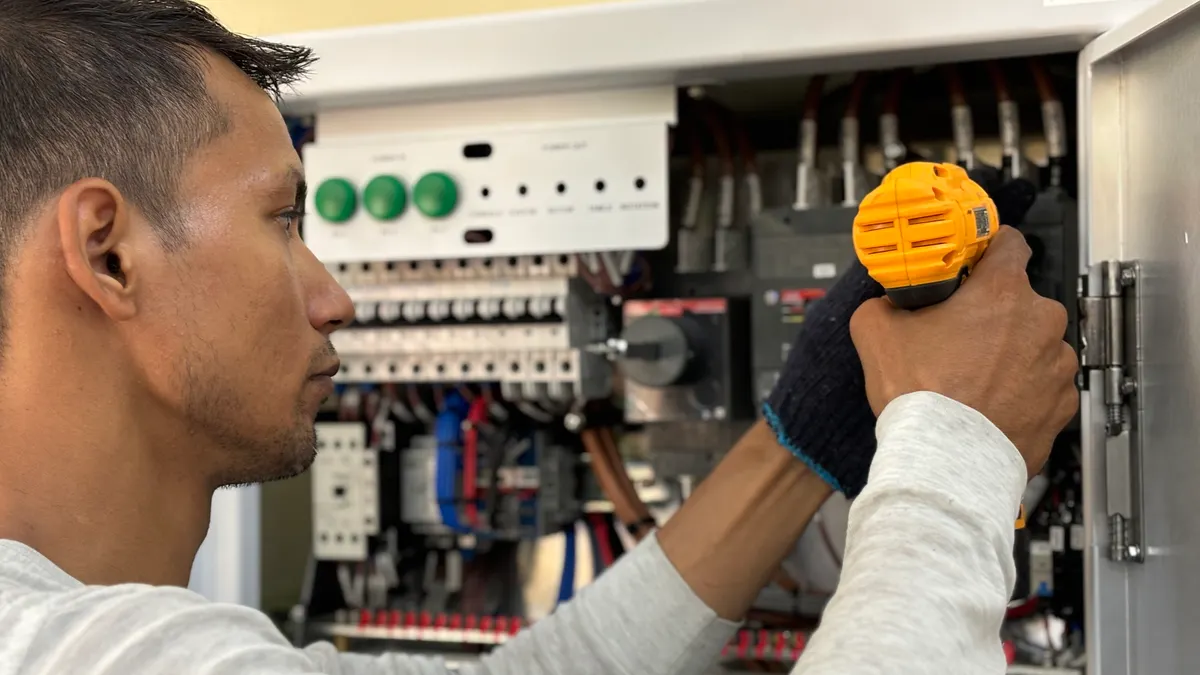
A licensed electrician is the right call when the problem is active, repeatable, or tied to heat, smell, or visible damage. That includes a burning smell near an outlet, sparking outlets, a breaker that trips again and again, an outlet or switch that feels warm, or old wiring that you do not fully understand.
The judgment is not “Can I make it work for now?” The judgment is “Is this likely to be a loose connection, overloaded circuit, damaged device, or wiring fault?” If the answer is uncertain, the safe move is to stop using that circuit and get help. A single bad connection can arc behind a wall and leave little obvious damage at the faceplate.
Treat the following as red flags, not chores:
- Burning smell, especially a fishy or plastic odor near a receptacle, switch, or electrical panel; if it continues, consult a professional.
- Sparking outlets when a plug is inserted or removed.
- Frequent breaker trips, especially on the same circuit.
- Warm or discolored outlet covers, plugs, or switch plates.
- Buzzing, crackling, or popping from an outlet or breaker panel.
- Old wiring with cloth insulation, brittle jacket, or two-prong outlets where grounding is absent.
- A breaker that feels hot, won’t stay reset, or trips immediately when load is added.
A generic DIY article often says, “Turn the breaker off and replace the outlet.” That advice skips the real issue: a damaged device may be the symptom, not the cause. If the wiring behind it is loose, the fix is not a $4 receptacle. It is a diagnosis.
If you are trying to sort the broader picture of home hazards, the hub on home electrical safety basics is the right companion page, but it does not replace a service call when one of these warning signs is present.
What a burning smell, sparking outlet, or warm plate is telling you
A burning smell usually means heat is already building somewhere you cannot see. That smell can come from insulation, dust, plastic, or wire connections that are running hotter than they should. If the smell is strongest at one outlet, switch, or the electrical panel, that is a stronger sign of a local fault than a whole-house issue. The National Fire Protection Association notes that electrical distribution and lighting equipment are a major source of home fires, so a smell should be treated as a warning, not a curiosity.
Sparking outlets are not all the same. A tiny, brief spark as a plug makes contact can happen with some loads, but repeated sparks, loud snaps, or visible arc marks around the slot are not normal. A sparking outlet may have worn contacts, loose terminal connections, or a damaged receptacle body. Once the metal parts inside are compromised, the problem tends to get worse, not better.
Warm outlet covers and switch plates matter because they point to resistance. Electricity passing through a bad connection generates heat. A faceplate that is merely slightly warm after heavy use is one thing; a cover that is hot to the touch, brown around the edges, or softening the plastic is another. That is not a patch-and-check situation. It is a sign to stop using the circuit.
The same logic applies to an electrical panel. If you smell burning near the panel, hear crackling, or notice scorch marks, stop using affected circuits and call a professional immediately. Panels are not a place for guesswork. Even with the main breaker off, parts of the panel can remain energized.
A common mistake is to assume a smell or spark is “just an old house thing.” Old houses do have old wiring, but age is not a cover story. Cloth-insulated cable, ungrounded circuits, and outdated connections all need a proper evaluation. That evaluation often includes the breaker size, conductor condition, and whether the circuit is being asked to carry more load than it was designed for.
Frequent breaker trips: when the breaker is doing its job and when it isn’t

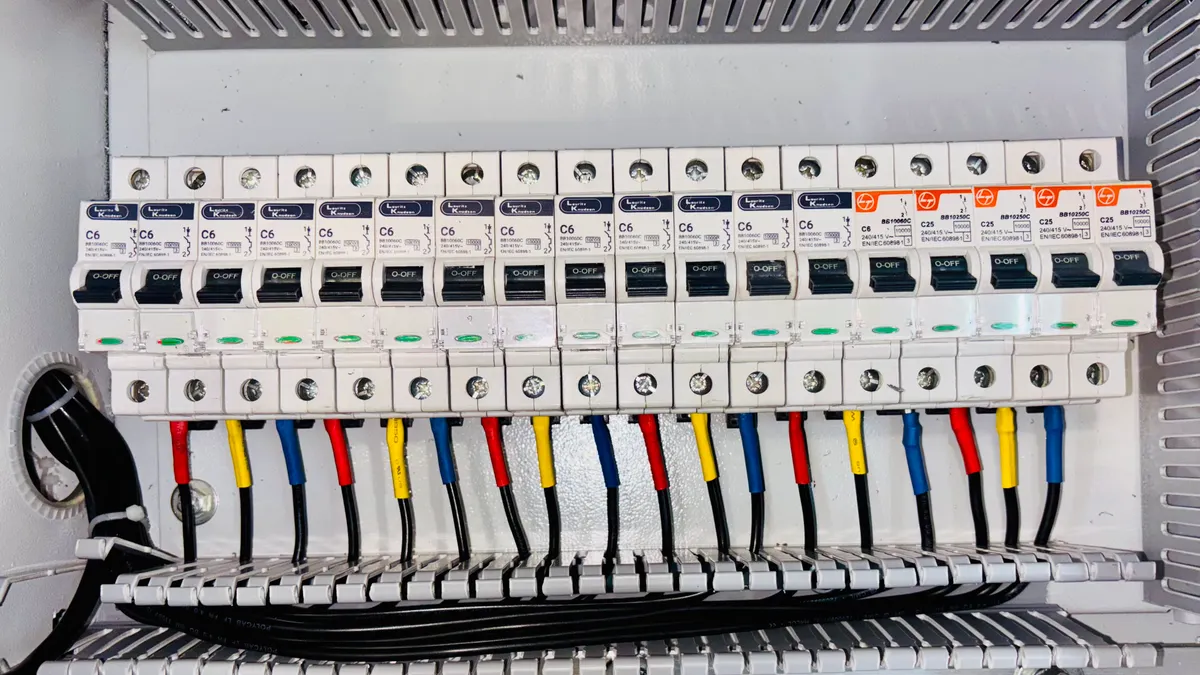
Frequent breaker trips mean the circuit needs attention if the same breaker keeps tripping under ordinary use. One trip after plugging in a space heater and a vacuum on the same 15-amp circuit is not unusual. A breaker that trips every few days, or trips again the moment it is reset, is not just “sensitive.” It is warning you about overload, a short, or a failing breaker.
A DIY fix is wrong when the response is to keep resetting the breaker and hoping it holds. Repeated trips can be caused by too many devices on one circuit, but they can also indicate a loose connection in a junction box, a damaged appliance cord, or a breaker that no longer performs properly. Those are different failures with different risks.
Here is the practical threshold:
- Unplug obvious heavy loads first. Space heaters, microwaves, window air conditioners, and portable AC units often pull more current than a small circuit can handle. If the breaker stops tripping after the load drops, the issue may be overload rather than damaged wiring.
- If the breaker still trips with light use, stop. A lamp and phone charger should not keep knocking out the same breaker. That pattern points away from normal load and toward a fault.
- Check for heat, odor, or buzzing at the panel. Any one of these turns the issue from annoying to urgent.
- Book an electrician if the trip repeats within a day or two. A professional can test the circuit under load, inspect connections, and determine whether the breaker itself needs replacement.
- Do not upsize the breaker to “fix” the problem. A 15-amp breaker replaced with a 20-amp breaker does not make undersized wiring safer. It can remove the protection the circuit was designed to have.
The bad outcome of this mistake is easy to miss. The breaker stops tripping, so the homeowner thinks the issue is solved. What actually changed is the last layer of protection. That is how overheated conductors and damaged insulation start.
How to decide whether a problem is a DIY fix or a call to a pro
A basic troubleshooting pass is fine only when the symptom is isolated, mild, and not tied to heat, smoke, or repeated failure. If the issue is simple and the circuit is otherwise normal, a homeowner can often narrow it down without opening a panel or touching live parts.
Use this decision path:
- Look for heat, smell, or visible damage. If you see scorch marks, smell burning, or feel warmth at an outlet or breaker panel, stop using that circuit and call a licensed electrician.
- Note whether the problem affects one spot or the whole house. One outlet or one breaker points to a localized fault. Multiple rooms on different circuits suggest a larger system issue that needs diagnosis.
- Match the symptom to the trigger. If a device causes the issue every time it is plugged in, the device or the receptacle may be the source. If the problem appears without a specific device, the wiring or breaker is more suspect.
- Check whether the circuit is being overloaded. A 15-amp or 20-amp branch circuit has limits. Space heaters, toaster ovens, and portable AC units can push a circuit past what it can safely carry.
- Decide whether the fix requires opening covered electrical parts. If the next step is replacing wiring, inspecting a junction box, or working in the panel, stop. That is electrician territory.
This approach does not solve the problem by itself. It keeps you from turning a warning sign into a bigger repair. A homeowner can safely unplug devices and reduce load. A homeowner should not chase hidden faults behind drywall, replace a breaker without confirming the cause, or keep testing a circuit that is getting hot.
The part many guides leave out is time. If the issue returns the same day, it is not a one-off. If it shows up once a month, the underlying defect may be intermittent, which is exactly the kind of fault DIY repairs miss. Intermittent electrical problems can be the hardest to diagnose because they disappear when the circuit cools down, so a licensed electrician is usually the safest next step.
What an electrician can check that a DIY repair cannot
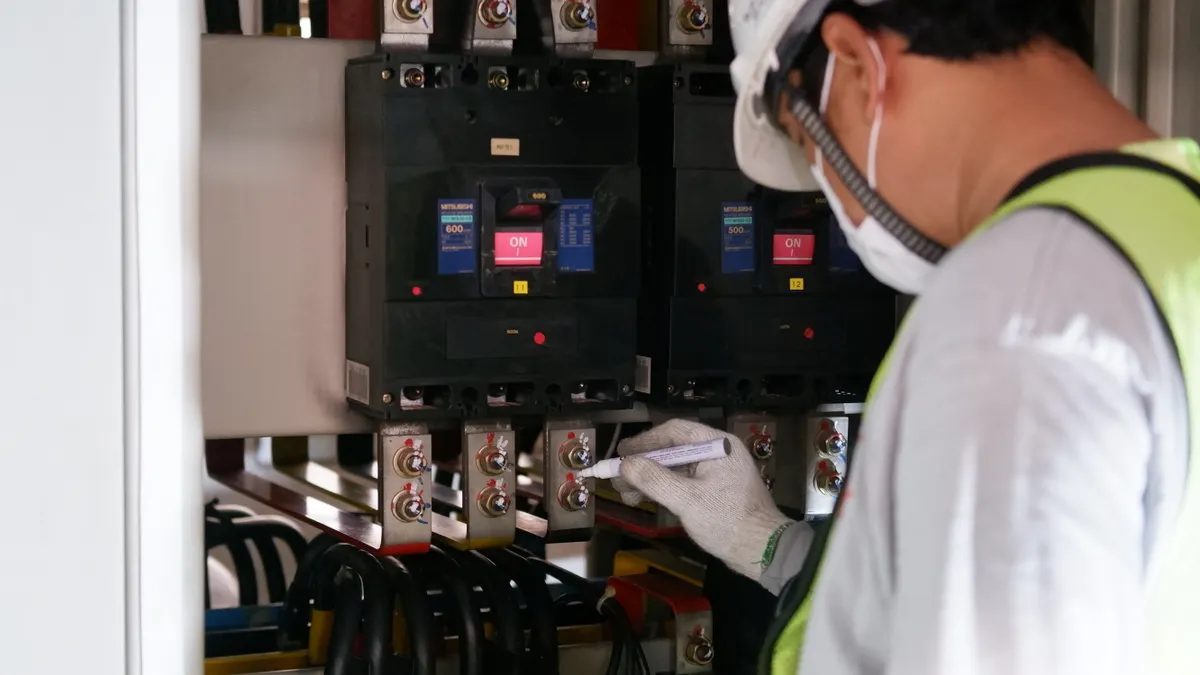
A licensed electrician can test the circuit, trace the fault, and judge whether the damage is at the outlet, in the wiring, at the breaker, or somewhere upstream. That matters because the visible symptom is often not the source. A hot outlet might trace to a loose neutral in a junction box. A tripping breaker might trace to a failing appliance. A burning odor might trace to a connection inside the panel.
A good service call is usually more efficient than trial-and-error parts swapping. Expect the electrician to inspect the panel, outlets, switches, and any suspect wiring on the affected circuit. In many homes, the work can be limited to a specific branch circuit rather than the whole system. In older homes, the inspection may expose outdated wiring methods or ungrounded circuits that need a longer repair plan.
The cost is affected by access, age of the wiring, the number of affected circuits, and whether the job is a diagnosis, a replacement, or a larger repair. A simple outlet replacement is one category of work. Troubleshooting a repeated breaker trip in an older panel is another. If the electrician has to open walls, trace hidden runs, or replace damaged sections of cable, the job takes longer and costs more. A straightforward call can sometimes be finished in under a few hours; a deeper repair can take most of a day or require a follow-up visit.
Ask these questions before the appointment:
- What symptoms should I describe exactly: smell, spark, heat, trip, or noise?
- Do you want the breaker left off until you arrive?
- If the problem is in the panel, do you handle that type of repair?
- Will you inspect the outlet, wiring, and breaker together, or only one piece?
- If you find old wiring, what are the likely next steps?
Those questions save time because they tell the electrician whether the issue is likely a local device problem or a broader circuit fault. They also help you understand whether the repair is minor or the start of a larger upgrade.
A realistic drawback of calling a pro is that the answer may not be a quick fix. Old wiring, overloaded circuits, and damaged panels often need more than one visit or more than one part. That is still better than masking the symptom and hoping the circuit behaves.
Signs you should stop using the circuit right now
Stop using the circuit immediately if the outlet is sparking repeatedly, the breaker trips as soon as you reset it, or you notice a burning smell near an outlet or the electrical panel. Those are not “monitor it for a while” symptoms. They are “turn it off and call for help” symptoms.
If you can do so without touching damaged parts, switch off the breaker for that circuit and leave it off. Keep people away from the area until it is inspected. If the panel itself is hot, noisy, or visibly damaged, do not keep poking at it to see whether it settles down.
This is especially important with old wiring. Homes with older electrical systems can have brittle insulation, undersized circuits, or connections that look fine from the outside but fail under normal load. A plug-in fan or lamp should not be enough to expose a serious fault. If it is, the system needs attention.
Because the damaged part can still be energized, do not make the mistake of treating the breaker as a nuisance switch you can reset over and over. The breaker is there to interrupt dangerous current. If it keeps doing its job, the right response is not to outsmart it. It is to find out why the circuit is overloading, shorting, or overheating.
If the problem is limited to a single appliance cord or a clearly damaged plug, replace the appliance or cord if that is the safe, obvious source. If the problem follows the outlet, the breaker, or the wiring, bring in a licensed electrician. That is the line.
What electrical problems are emergencies?
Electrical problems are emergencies when there is active smoke, fire, repeated sparking, a burning smell that will not stop, or a panel that is hot, noisy, or visibly damaged. Those signs point to heat or arcing, which can spread fast. If there is any fire or smoke, leave the area and contact emergency services first, then arrange a licensed electrician. The National Fire Protection Association and the U.S. Consumer Product Safety Commission both treat these signs as serious hazards.
Can I do my own electrical repairs?
You can handle only the simplest external checks, like unplugging devices, reducing load, and turning off a breaker if you can do that safely. You should not open a panel, replace a breaker, rewire a circuit, or keep testing a hot or sparking outlet. If the fault is hidden or repeats, a licensed electrician is the right call.
What happens if I ignore warning signs?
Ignoring warning signs can turn a small fault into damaged wiring, a failed outlet, or a larger electrical fire risk. A breaker that keeps tripping or an outlet that feels warm is often protecting you from worse damage. If the symptom comes back, the circuit is telling you it has not been fixed, only interrupted.
Drafted with AI; not yet reviewed by a person.