Last updated: October 22, 2026
Quick Answer: for many modern homes, a 200-amp service is the practical target, but the correct size still depends on the calculated load, the service condition, and what the utility and local code allow. Electrical Panel Upgrades and Breakers: The Complete Guide comes down to one question: does the panel still match the home’s real electrical load, or is it forcing an aging layout to do a modern job? If the answer is no, the fix is usually a service-panel upgrade, a breaker replacement, or both — and the right choice depends on capacity, safety condition, and what the utility and local code will allow.
I write about electrical systems with a focus on code, load calculation, and failure modes, because this is one of those topics where a small misunderstanding can become a fire risk or an expensive do-over. If a panel is tripping, warm, rusty, or full, the next move is not guesswork, and a licensed electrician should inspect it before anything is replaced.
Key takeaways
- A breaker trip is not the same thing as a panel failure; sometimes the circuit is overloaded, sometimes the breaker is worn out, and sometimes the panel is simply undersized.
- A 100-amp service can be enough for a modest home, but it is often the wrong fit once you add EV charging, electric heat, a heat pump, a hot tub, or major kitchen equipment.
- Panel upgrades are driven by load calculation, service condition, and code requirements, not by the desire for “more amps” in the abstract.
- Breakers must match the panel model and rating system; the wrong breaker can look like it fits while still being unsafe or noncompliant.
- Federal Pacific Electric, Zinsco-era, and other obsolete panel families deserve special scrutiny because documented failure concerns are tied to certain designs, not just age.
- A subpanel can solve space problems, but it does not increase the service capacity of the main panel by itself.
- If the panel has corrosion, heat damage, double-tapped lugs where not allowed, or nuisance tripping after load changes, a licensed electrician should inspect it before anything is replaced.
What actually forces an electrical panel upgrade?
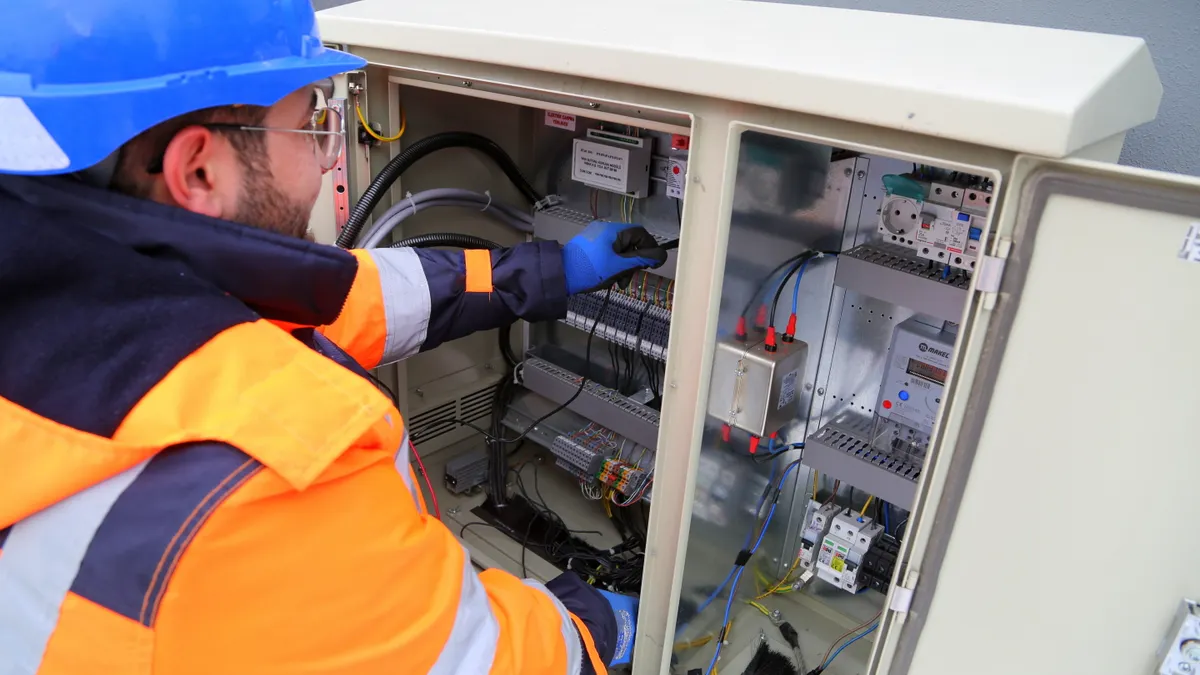
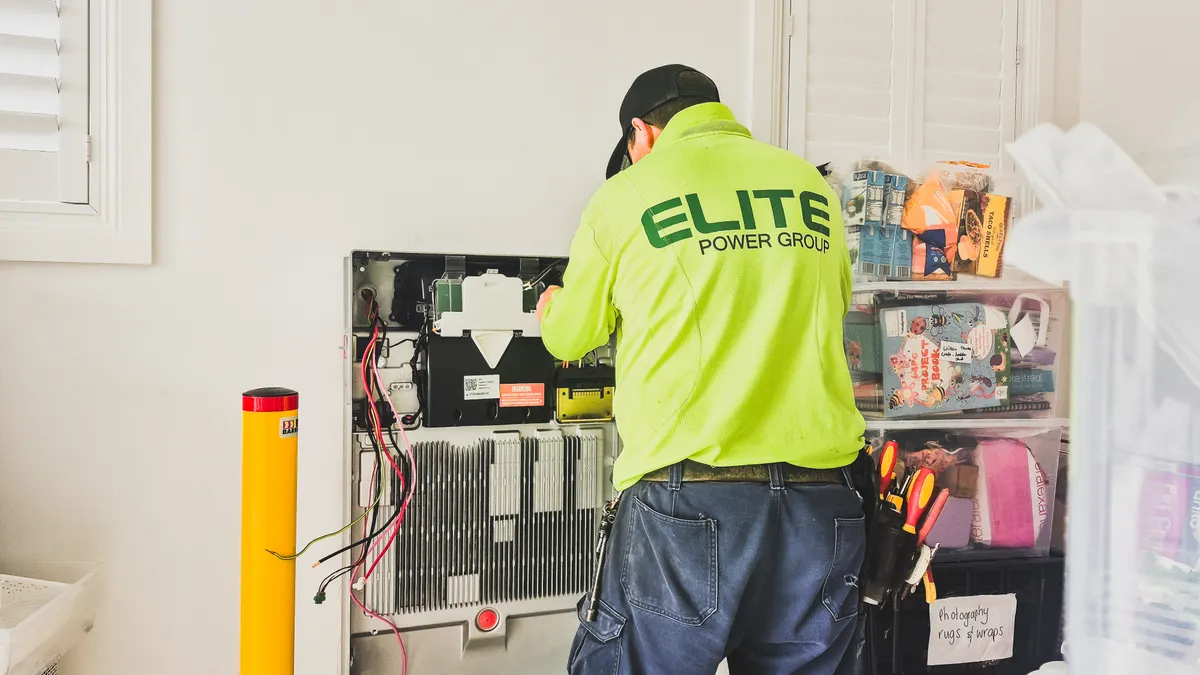
A panel upgrade is needed when the existing service can no longer carry the home’s load safely or cleanly. The trigger is usually one of four things: not enough amperage, not enough breaker spaces, physical damage, or an obsolete panel design.
The most common modern pressure point is load growth. A house built around 100-amp service may have been fine with gas heat, a few window units, and modest kitchen demand. Add a 40-amp EV charger, induction cooking, a heat pump, an electric dryer, or a finished basement with new circuits, and the margin disappears fast. A 200-amp service often becomes the practical target, though the right answer depends on the service calculation under the National Electrical Code, not on a rule of thumb.
Space matters too. A panel with no open slots does not automatically need a larger main rating, but it does need a plan. Sometimes the solution is a subpanel. Sometimes it is a full replacement because the existing cabinet is obsolete, crowded, or unsafe to extend.
Damage is a separate issue. Rust, water intrusion, burn marks, melted insulation, loose bus bars, or a hot smell means the panel is not merely “old.” It may be compromised. A panel with physical damage is not a cosmetic candidate.
The last category is the one generic articles often underplay: obsolete design. Certain panel families have a long history of concern in the field. Federal Pacific Electric Stab-Lok equipment and many Zinsco/Sylvania variants are still discussed because of breaker and bus reliability concerns, not because they are old enough to be interesting. Age alone does not condemn a panel; documented design problems do.
For code context, the National Fire Protection Association’s NEC resources are the right starting point: https://www.nfpa.org/nec. Local adoption and amendments still control the final decision, so the permit office matters as much as the catalog.
How do I know if the panel is the problem or the breaker is?
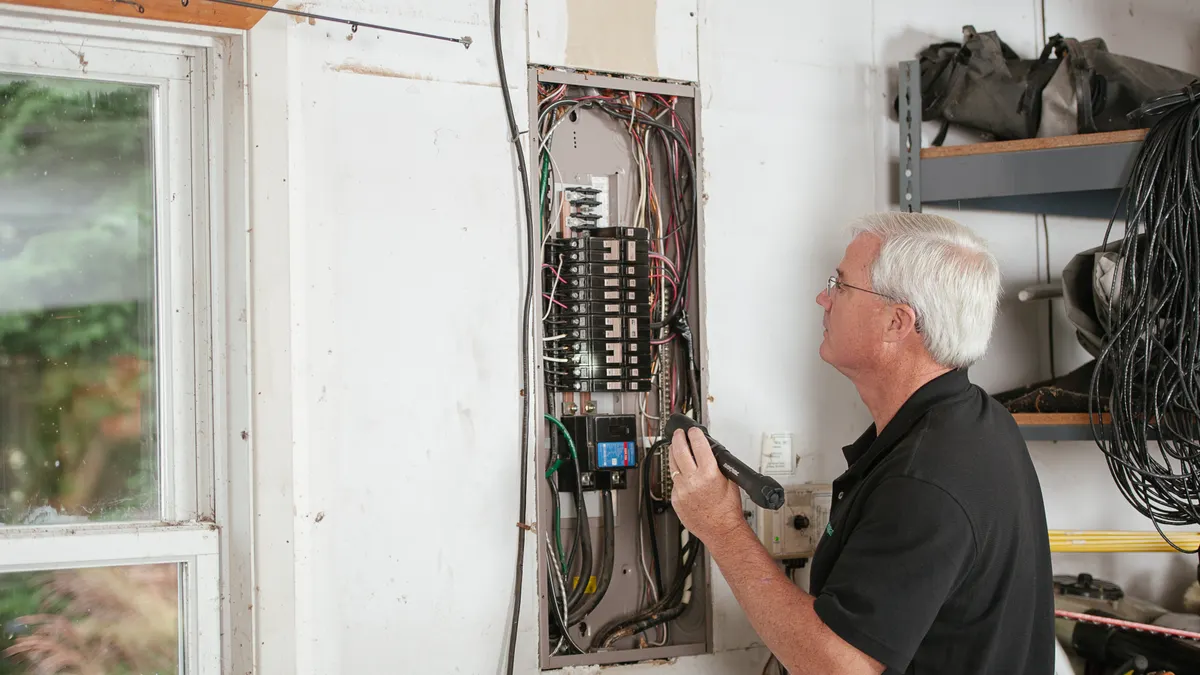
The breaker is the first suspect when one circuit trips repeatedly, but the panel becomes the suspect when trips, heat, corrosion, or space issues affect multiple circuits. One bad breaker can be replaced; a failing bus or undersized service changes the whole job.
A breaker’s job is narrow: protect a branch circuit from overload or short circuit. If a 15-amp breaker trips when a space heater, vacuum, and hair dryer share the same circuit, the breaker may be doing exactly what it should. That is not a breaker defect. It is a load problem. In that case, adding a new circuit or redistributing loads is smarter than swapping hardware.
A breaker becomes a likely replacement when it trips without a matching load issue, will not reset normally, feels loose in the panel, shows heat discoloration, or has internal wear from age and cycling. Breakers are mechanical devices. They do fail.
The panel itself is the problem when the bus stabs are damaged, the enclosure is rusted through, the neutral and grounding arrangement is wrong for the system, or the brand/model is known for specific reliability concerns. If the entire panel has multiple failing breakers, the repair starts looking like a panel replacement rather than a parts swap.
The useful distinction is this: if the problem follows one circuit, focus on that breaker and that branch circuit. If the problem follows the panel, the service, or several unrelated circuits, the panel gets the harder conversation.
This is also where a load calculation matters more than instincts. An electrician may measure the connected load, review the service size, and compare it with the NEC method rather than guessing from appliance count alone. That calculation is the difference between “we can rearrange circuits” and “the service needs to be increased.”
What size panel does a modern home actually need?
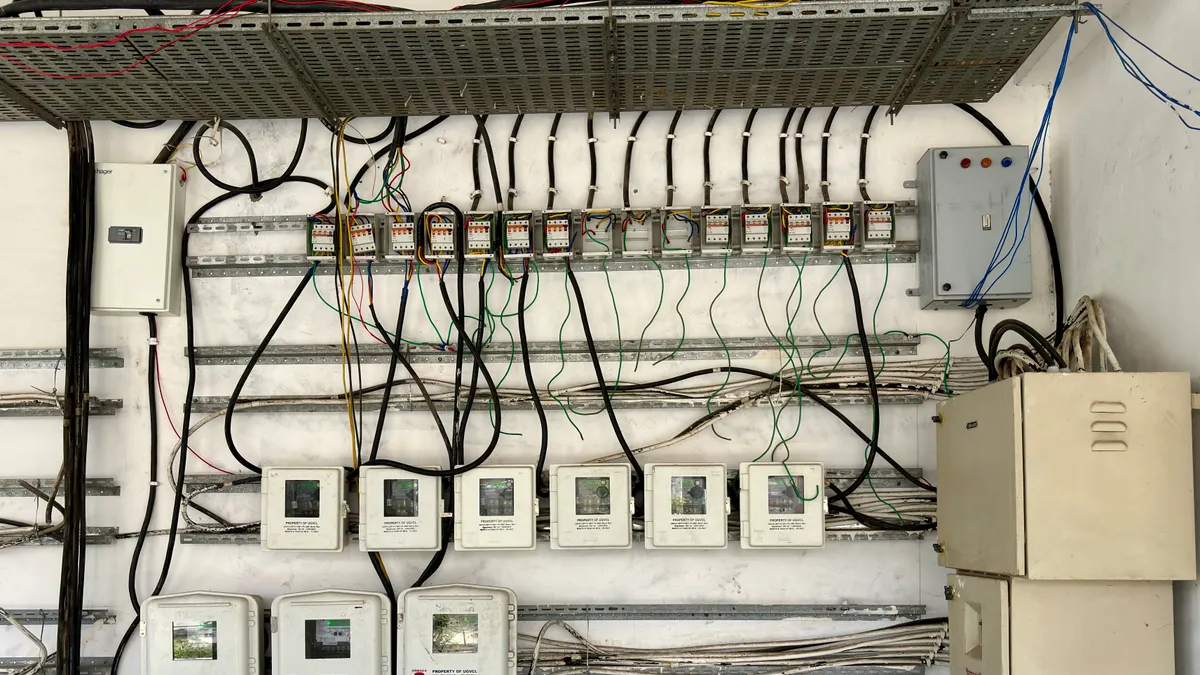
A 200-amp service is the most common practical upgrade for many modern homes, but the correct size is whatever the load calculation and utility service support. Smaller homes can function well on 100 amps; larger or heavily electrified homes may need more than 200 amps.
A lot of advice treats 200 amps as the universal answer. It is not. It is a common answer because it gives headroom for central air, kitchen appliances, laundry, and moderate future growth. It also fits many replacement projects without forcing the utility service into a completely different class.
A 100-amp panel can still be perfectly legal and sufficient in a smaller home with gas appliances and light electrical demand. It can also be the wrong answer in a 1,800-square-foot house with an EV charger and all-electric heating. Size depends on what is actually connected, not on square footage alone.
Here is the practical filter I would use:
- If the home has gas heat, no EV charger, and modest appliance demand, a careful load calculation may show that 100 amps is enough.
- If the home is adding a Level 2 EV charger, electric cooking, a heat pump, or a workshop, 200 amps is often the better planning choice.
- If there is major electrification plus a future solar battery setup, a standby generator, or multiple high-load appliances, the conversation may need to include service architecture, not just panel size.
The breaker count matters too. A 200-amp panel with 40 spaces is not just “bigger” than a 100-amp panel with 20 spaces; it can reduce the need for tandem breakers and ugly workarounds. That said, more spaces do not justify oversizing the service. The panel must match the calculated demand and the available service entrance equipment.
A panel upgrade is wrong for a house that only needs one new branch circuit. In that case, the better move may be a subpanel, a dedicated circuit, or a load management device.
Breaker types, ratings, and compatibility: what matters
Breaker compatibility matters more than most homeowners realize, and the wrong breaker choice can be unsafe even when it looks physically close. The right breaker is the one listed for that specific panel and that specific application.
The first rule is simple: do not treat breakers as universal parts. A breaker must be approved for the panel bus and the manufacturer’s listing, and a licensed electrician should confirm that match before installation. The little differences people ignore — stab geometry, thermal calibration, connection style, and interrupting rating — are the differences that matter in a fault.
The second rule is amperage. A 20-amp breaker on 12-gauge copper is standard for many branch circuits, but a breaker size is never chosen by habit alone. It has to match conductor size, circuit purpose, and code requirements. Oversized breakers on undersized wire are a direct hazard.
The third rule is breaker function. Standard thermal-magnetic breakers are used for ordinary branch circuits. AFCI breakers are used in many living spaces under current NEC rules. GFCI protection is required in many wet or service areas. Some circuits need dual-function breakers that combine both protections. That can affect the number of breaker spaces you need and the panel brand you choose.
The fourth rule is physical fit. Tandem breakers, quad breakers, and handle ties are not a free pass to pack more circuits into any box. Panels are labeled with exactly what types are permitted and where. If the label does not allow it, it is not a clever workaround; it is a violation.
A generic article often misses the practical consequence: breaker mismatch can create heat, nuisance trips, or a false sense of safety. A breaker that “fits” is not the same thing as a breaker that belongs.
For code and standard references, the NEC remains the governing baseline in the U.S., and breaker manufacturers publish compatibility charts for each panel series. If the panel is old enough that the manufacturer no longer supports it, replacement becomes the more defensible choice.
The honest side-by-side: repair, subpanel, or full upgrade
A full panel upgrade wins when the panel is undersized, obsolete, damaged, or already at the edge of its safe capacity. A subpanel wins when the main service is adequate but the building needs more circuit space in a specific area. A breaker swap wins only when the problem is local and the panel is otherwise sound.
| Criteria | Breaker replacement | Full panel upgrade | Winner for this condition |
|---|---|---|---|
| Cost impact | Lower, because it targets one part | Higher, because it can include service gear and permit work | Breaker replacement when the issue is isolated to one circuit |
| Capacity increase | None | Yes, if service and conductors are upsized | Full panel upgrade when the home needs more load capacity |
| Space for new circuits | None | Yes | Full panel upgrade when breaker slots are full |
| Speed of scope | Usually faster | Usually slower because of utility, permit, and inspection steps | Breaker replacement for a single failed breaker |
| Safety improvement | Limited to that circuit | Broader, especially if the panel is old or damaged | Full panel upgrade for obsolete or heat-damaged equipment |
| Compatibility risk | Medium to high if the wrong breaker is chosen | Lower if the whole system is modernized | Full panel upgrade when the existing panel line has poor parts availability |
| Best use case | One breaker fails, panel is otherwise healthy | Multiple issues, more load, or obsolete panel | Depends on the problem shape |
| Code flexibility | Minimal | Better chance to meet current layout and protection rules | Full panel upgrade for remodels and electrification |
The table hides one important truth: a subpanel often belongs between these two choices. If the main panel has enough service capacity but no room, a properly fed subpanel can be the cleanest fix. It does not increase the service rating, but it can solve the “no spaces left” problem without tearing out perfectly good main service equipment.
That is the option generic articles skip because it is less dramatic than a complete replacement. In real homes, it is often the right middle path.
When a subpanel is smarter than a whole-house replacement
A subpanel is smarter when the main service has capacity left, the main gear is in decent shape, and the problem is localized to a garage, addition, basement, or workshop. It is the right tool for expanding circuits without rebuilding the whole service.
This is the option for homeowners who have one overloaded zone, not a failing house-wide system. A garage workshop with dust collection, a home office cluster, or a finished basement with new lighting and receptacles may need six to ten additional circuits. A subpanel can handle that neatly.
The strength of a subpanel is separation. It gives new circuits a cleaner path, better organization, and a more readable layout for future maintenance. It also avoids the disruption of utility coordination in some cases, depending on how the service is arranged.
The weakness is equally clear: it does not solve an underpowered service entrance. If the main service is already struggling, a subpanel just moves the wiring around. It can also create confusion if grounding and neutrals are not separated correctly in the downstream panel. A bad subpanel installation is its own kind of mess.
A subpanel is wrong for homes with obsolete main gear, water-damaged enclosures, severe corrosion, or service sizes that are already too small for current demand. It is also a poor choice if the goal is to support electrification that will materially increase total household load. In that case, the main service still needs attention.
The specific profile that fits best is a home with a sound 150-amp or 200-amp service, a decent main panel, and a need for additional circuits in one area. If the homeowner is adding an EV charger, a major kitchen remodel, or a heat pump, the subpanel may still be part of the answer — but only after the service calculation confirms headroom.
The hidden costs and delays nobody mentions
The hidden cost of a panel upgrade is often not the panel itself; it is the corrective work that the inspection reveals. Expect the job to expand if the grounding, bonding, meter base, mast, or feeder conductors are outdated.
That is the part most generic guides gloss over. A panel swap rarely happens in a vacuum. Once an electrician opens the service equipment, they may find older conduit, undersized conductors, a missing bonding screw, improper neutral sharing, or a service entrance that no longer satisfies local requirements. The project grows because the system has to work as a system.
Permits and inspections matter here. A panel replacement is not a stealth repair. The local authority having jurisdiction may require a permit, a utility disconnect/reconnect, and a final inspection. That can add delay even when the actual installation is straightforward.
There are also coordination issues. Some utilities require notice for service work. Some municipalities have specific meter height, clearance, or grounding requirements. A homeowner who wants a same-day swap may be disappointed if the utility schedule says otherwise.
One more cost that gets ignored: circuit rework. If the new panel does not accept the existing breakers, or if AFCI/GFCI requirements change during the upgrade, some breakers will need replacement too. That can turn a simple panel change into a broader panel-and-protection update.
The honest position is this: if the panel is merely old but functional, replacement may not be urgent. If the panel is old, full, damaged, or incompatible with the next stage of the home’s electrical use, the cost of waiting is usually higher than the cost of doing it once.
When should the verdict flip?
The verdict flips when the apparent “panel problem” is really a load, wiring, or utility problem. In those cases, the wrong upgrade wastes money and leaves the real fault untouched.
-
The breaker trips only on one appliance-heavy circuit.
If the circuit overloads when a microwave and toaster share the same line, the fix may be a new dedicated circuit, not a panel swap. -
The panel is new, but the home still trips under load.
A modern panel with repeated trips points toward a branch-circuit design issue, loose terminations, or a load calculation miss. A brand-new panel is not the answer by itself. -
The service conductors or meter equipment are the weak link.
If the service entrance is the limiting factor, upgrading only the interior panel does not solve the bottleneck. -
The home is being sold and the issue is minor.
In some cases, a documented repair of one breaker or one defective circuit is enough to restore function without full modernization. A full upgrade may be overkill if the service is otherwise sound and the next owner is not adding load.
These exceptions matter because “replace the panel” is a blunt answer. The real fix follows the fault, not the trend.
What I would choose in each case
Choose a breaker replacement if one circuit trips, the panel is otherwise healthy, and the breaker model is listed for that panel. Choose a full panel upgrade if the home has obsolete equipment, corrosion, heat damage, too little capacity, or no room left for the circuits the house actually needs. Neither if the issue is really a branch-circuit overload, a utility-side limitation, or a wiring defect outside the panel.
That is the cleanest call. A breaker swap is a surgical fix. A panel upgrade is a structural one. The mistake is using one when the other is required.
If the homeowner is asking, “Can I just put in a bigger breaker?” the answer is almost always no, unless the wire size, circuit design, and panel listing all support it. If the homeowner is asking, “Do I need 200 amps?” the answer is, “Only if the calculated load and future use justify it.” If the homeowner is asking, “Why does this keep tripping?” the answer is usually somewhere between the breaker, the load, and the panel’s age.
The most reliable path is boring but correct: check the panel label, verify breaker compatibility, calculate load, inspect for heat or corrosion, and follow the permit process. That sequence is slower than a guess and far cheaper than correcting a bad electrical decision after the drywall goes back up.
Which sources should I trust before hiring someone?
The best sources are the NEC, your local building department, the panel manufacturer’s listing instructions, and a licensed electrician who can explain the load calculation in plain language. The National Fire Protection Association’s NEC resources and the Occupational Safety and Health Administration’s electrical safety guidance are both useful starting points: https://www.nfpa.org/nec and https://www.osha.gov/electrical.
That last point matters. Electrical panel upgrades are not a social-media debate. They are a code-compliance and safety decision. The panel either fits the home’s load and equipment, or it does not. A good recommendation can prove its case with the service rating, the breaker listing, the circuit count, and the condition of the gear. A bad recommendation hides behind “it’s probably fine.”
If the reader needs one simple rule to keep in mind, it is this: replace the breaker when the problem is local, replace the panel when the problem is systemic, and stop and reassess when the issue is really in the load, the wiring, or the service feed.
Drafted with AI; not yet reviewed by a person.