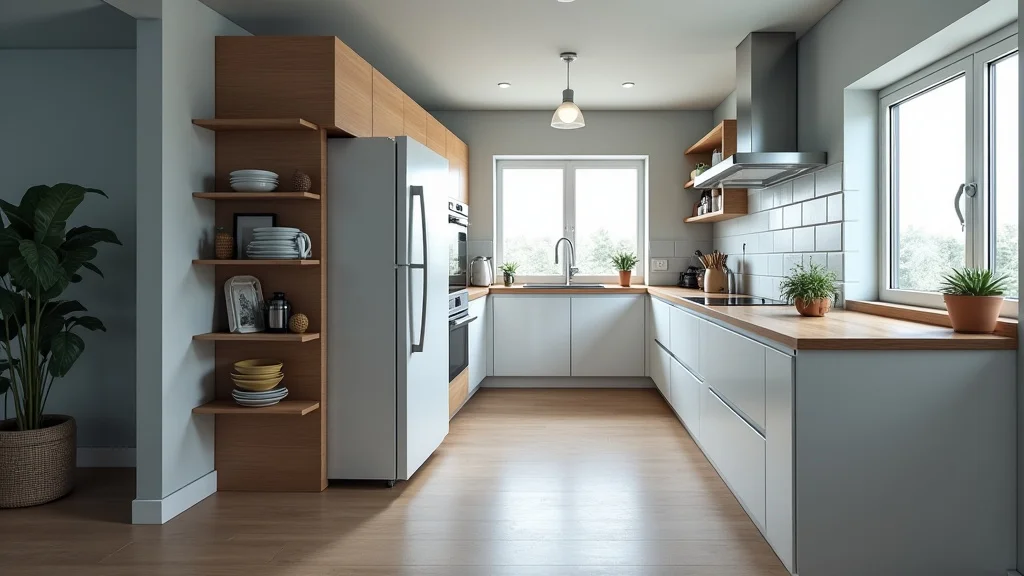
Imagine your refrigerator creating custom ice cream flavors based on your mood, or your oven printing a perfectly shaped cake. Sounds futuristic? It’s closer than you think. Technology is rapidly transforming how we live, and 3d home appliances are at the forefront of this revolution. From personalized food preparation to sustainable product design, these innovations are changing the way we interact with our homes. This post will explore the exciting possibilities and potential of this rapidly developing area, providing you with a clear roadmap of what’s to come and why it matters. By the end, you’ll have a solid grasp of this technology and its impact on everyday life, reducing any confusion and increasing your knowledge. Let’s explore how these devices are shaping the future.
Key Takeaways
- 3D printing enables the creation of customized appliances, perfectly suited to individual needs.
- New materials and manufacturing processes are making appliances more efficient and environmentally friendly.
- 3D technology offers opportunities for streamlined repairs and part replacements.
- The ability to design and produce on demand reduces waste and improves sustainability.
- 3D printing empowers consumers with greater control over product design and functionality.
- These devices are set to revolutionize how we interact with our kitchens and homes.
The Rise of 3d Home Appliances
The concept of 3D printing, also known as additive manufacturing, has quickly moved from science fiction to practical reality. Instead of subtracting material (like carving a sculpture), 3D printing builds objects layer by layer. This allows for incredibly intricate designs and customized products. This method is now making significant changes in home appliances. These appliances are becoming smarter, more efficient, and more tailored to individual needs. The shift is already visible in several areas, including food preparation, home repair, and even personalized furniture. The implications of this are significant, with the potential to reduce waste, increase efficiency, and provide consumers with unprecedented control over their household products.
Additive Manufacturing Explained
Additive manufacturing, more widely recognized as 3D printing, is a groundbreaking process that creates three-dimensional objects from a digital design. This technology functions by adding successive layers of material, which can be plastic, metal, ceramic, or composite, to build a physical object. The process typically begins with a digital model, created using CAD (Computer-Aided Design) software. This model is then sliced into numerous thin layers. These layers become the blueprints for the 3D printer. The printer deposits the material layer by layer, according to the instructions from the digital file, until the object is fully formed. There are various 3D printing technologies, including Fused Deposition Modeling (FDM), Stereolithography (SLA), and Selective Laser Sintering (SLS), each utilizing different materials and methods. The versatility and precision of additive manufacturing have made it a driving force in innovation, creating opportunities for customization and the manufacturing of complex objects. This process greatly reduces material waste compared to traditional manufacturing processes.
- Layer-by-Layer Construction: Unlike traditional manufacturing, 3D printing builds objects by adding material layer by layer.
- Digital Design Integration: 3D printing relies on digital models (CAD) that act as blueprints, enabling intricate designs.
- Material Versatility: A broad range of materials can be used, including plastics, metals, and composites.
- Customization Capabilities: 3D printing allows for products to be tailored to the specific needs and preferences of individual users.
Impact on Appliance Design and Functionality
3D printing changes appliance design and functionality, enabling previously impossible product features and a new level of customization. Designers are no longer limited by the constraints of traditional manufacturing, which opens the door for innovative shapes, integrated functionalities, and unique aesthetic elements. This means appliances can be created that are optimized for space efficiency, improved performance, and user convenience. For instance, refrigerators could feature customized shelving systems designed to hold specific types of food, reducing wasted space and improving organization. Ovens could incorporate internal designs that distribute heat more evenly, resulting in better cooking results. Moreover, consumers can have a greater influence over the design of their appliances, leading to products that precisely meet their requirements. This leads to devices that are visually appealing and functional and designed with the user’s specific lifestyle in mind.
- Enhanced Design Freedom: 3D printing removes limitations of traditional methods, allowing complex shapes.
- Optimized Functionality: Integrated designs lead to appliances that can perform better and more efficiently.
- Personalized Customization: Customers can tailor appliances to their preferences, leading to highly personalized products.
- Improved User Experience: Appliances can be designed for improved convenience, better usability, and intuitive controls.
3d Printing and the Future of Kitchens
The kitchen of tomorrow will be a very different place, largely due to 3D printing. We can imagine kitchens where appliances are created on demand, tailored to individual culinary preferences and dietary needs. Imagine a 3D-printed food synthesizer that can create custom meals using ingredients from your pantry. Or, a dishwasher that can print replacement parts on the spot, eliminating the need for waiting for repairs. The possibilities are truly remarkable. The potential also includes a reduction in food waste by allowing precise portioning and minimizing the need to throw away unused ingredients. The use of sustainable materials in the printing process will further support environmentally conscious design. As the technology grows, we can anticipate seeing entirely new categories of appliances emerge, integrating seamlessly into smart home systems and improving our overall quality of life.
- Personalized Food Creation: 3D printers can create custom meals, allowing for specific dietary requirements.
- On-Demand Appliance Production: Appliances can be made on the spot, reducing waste and lead times.
- Integration of Smart Technologies: Appliances will link with smart home systems, improving convenience and efficiency.
Materials and Sustainability in 3d Home Appliances
The materials utilized in 3D-printed home appliances and their environmental impact are important considerations. The industry is seeing a shift toward the use of sustainable and renewable resources. These include bioplastics made from plant-based sources and recycled materials, decreasing the ecological footprint of these products. Research is focusing on creating durable and functional materials that can endure the rigors of household use. The use of additive manufacturing itself is also very helpful. It reduces material waste compared to traditional subtractive manufacturing processes, which cut away excess material to form an object. 3D printing can create lighter-weight products, lowering energy consumption during transport. The ability to produce parts and appliances on-demand also minimizes the need for storing large inventories, reducing waste throughout the supply chain. These advances signal a move toward more sustainable and environmentally responsible manufacturing practices.
Sustainable Materials in 3d Printing
The transition toward sustainable materials is crucial for the 3D-printing sector. Bioplastics, derived from sources such as cornstarch, sugarcane, and cellulose, are increasingly popular due to their reduced impact on the environment. These materials are biodegradable or compostable, reducing waste and contributing to a circular economy. Recycled materials, including reclaimed plastics and metals, are also being incorporated into the process. The usage of recycled materials decreases the demand for new resources and helps reduce landfill waste. Researchers are working to develop composites that combine sustainability with improved performance, such as strength and heat resistance. The goal is to provide appliances that are both environmentally friendly and long-lasting. By using a diverse range of eco-friendly materials, the 3D-printing industry is helping to lessen the negative effects of manufacturing on the environment.
- Bioplastics: Made from renewable sources, such as cornstarch and sugarcane.
- Recycled Materials: Repurposed plastics and metals to reduce waste.
- Composites: Blending sustainable materials for enhanced performance and durability.
- Biodegradable Options: Materials designed to break down naturally after use, minimizing landfill waste.
Reducing Waste through Additive Manufacturing
One of the significant advantages of 3D printing is its ability to reduce waste. Traditional manufacturing methods, such as machining, often result in considerable material waste because they involve removing material to create a product. In contrast, 3D printing is an additive process. It builds objects layer by layer, only using the material needed for the final product. This minimizes material waste and lowers the environmental impact of manufacturing. Moreover, 3D printing can create complex designs that are hard or impossible to produce using traditional methods, optimizing the use of materials and reducing the need for excess components. The ability to print parts on demand also eliminates the necessity for large inventories, further cutting down on waste. By using only what is required, 3D printing plays a vital role in increasing sustainability and promoting more efficient manufacturing practices.
- Material Efficiency: 3D printing reduces material use.
- On-Demand Production: Printing parts as needed eliminates excess inventory.
- Design Optimization: 3D printing enables creating designs that reduce waste.
Energy Efficiency and the Circular Economy
Energy consumption is a key factor when evaluating the environmental impact of home appliances. 3D printing offers opportunities to improve energy efficiency in several ways. The process allows for the production of lightweight components, which can decrease the energy required for appliance operation and transportation. Moreover, 3D printing makes it easier to design appliances with efficient heat management and energy-saving functions. The concept of the circular economy is central to sustainable manufacturing practices. It emphasizes the importance of designing products for longevity, recyclability, and reuse. 3D-printed home appliances support this model by allowing for easy repair and part replacement, extending the life of products and reducing the need to throw them away. By focusing on energy efficiency and facilitating a circular economy, the 3D-printing sector is contributing to a more sustainable future.
A study by the Lawrence Livermore National Laboratory showed that 3D printing can reduce energy consumption during the manufacturing phase by up to 50% compared to traditional methods.
| Factor | Traditional Manufacturing | 3D Printing |
|---|---|---|
| Material Waste | High | Low |
| Energy Consumption (Manufacturing) | Higher | Lower |
| Design Complexity | Limited | Unlimited |
3d Appliances for Customization and Personalization
One of the most exciting aspects of 3D-printed appliances is the opportunity for customization and personalization. Consumers can tailor their devices to meet their individual needs and preferences. This is a big shift from the one-size-fits-all model of conventional appliances. It’s a method that enables designers to create products that enhance the user experience and address unique requirements. From refrigerators with specialized shelving layouts to ovens with custom-built heating elements, the possibilities are vast. This level of customization improves functionality and allows people to express their individual styles. It’s a move toward a more user-centered approach to appliance design, where the devices are designed around the people who use them rather than the other way around. This shift is creating a new connection between consumers and their appliances.
Custom Design and Tailored Functionality
The ability to custom design and tailor the functionality of home appliances is transforming the appliance industry. With 3D printing, the constraints of traditional mass production are no longer a concern. This opens the door to creating appliances with features and designs that perfectly fit the needs of individual users. This could mean refrigerators with custom shelving systems to maximize space and organization. It could also mean ovens with unique heating elements to enable specific cooking methods. These customizations can extend to a variety of areas. From the design of ergonomic handles and user interfaces to the inclusion of specialized sensors and controls. The focus is to deliver appliances that enhance performance and improve user experience. The result is appliances that are not just functional but also personalized tools that seamlessly integrate into the daily lives of the users.
- Personalized Design: Create appliances with designs that meet specific preferences.
- Enhanced Functionality: Customize features to optimize performance.
- User-Centered Approach: Products are developed with the user’s requirements in mind.
- Improved Efficiency: Appliances are made to utilize space and resources more efficiently.
The Rise of on-Demand Manufacturing
On-demand manufacturing is quickly becoming a norm, with 3D printing as the driving force. It allows for appliances to be produced only when they are needed. This is a game-changer for several reasons. Firstly, it substantially reduces the need for large inventories. This cuts down on waste and eliminates the expenses associated with storage. Secondly, on-demand manufacturing allows for faster delivery times, making the manufacturing and distribution of appliances more responsive to consumer demand. Thirdly, it supports mass customization, allowing consumers to modify products according to their individual preferences. With on-demand manufacturing, it’s possible to create appliances in small quantities or even single units. This makes the production of specialized items more viable. The use of this model is reshaping the appliance industry and making it more flexible, efficient, and user-centric.
- Inventory Reduction: Printing parts only when needed.
- Faster Delivery: Production is more responsive to consumer demand.
- Mass Customization: Enables the ability to customize products.
Empowering Consumers through Design
3D printing provides consumers with an unprecedented level of control over the design and functionality of their home appliances. It’s moving from being passive consumers to active participants in the product development process. With the rise of user-friendly design software and online platforms, people can develop and adapt appliance designs to meet their unique needs. Imagine a world where you could change the features of your appliances at any time. This also means consumers are empowered to make more informed choices about the products they buy. It creates a stronger relationship between users and the appliances, leading to greater satisfaction and product loyalty. This level of empowerment creates a shift toward more sustainable consumption patterns. It encourages people to make more intentional purchases and invest in products that truly meet their needs.
3d Printing for Repair and Replacement
3D printing is changing the landscape of appliance repair and part replacement. Traditional methods often involve long wait times for ordering parts or high costs to replace entire components. 3D printing changes this by allowing for the production of replacement parts on demand. This saves consumers time and money and supports the lifecycle of appliances. This approach also reduces e-waste by extending the operational life of existing appliances and minimizing the need to discard them due to the unavailability of parts. The potential of 3D printing to revolutionize appliance repair is enormous. It offers a more efficient, cost-effective, and sustainable solution to keeping our home appliances functioning properly. This has a direct impact on reducing waste and improving the lifespan of household items.
On-Demand Part Production
One of the most notable benefits of 3D printing is the capability to produce appliance parts on demand. Instead of waiting for
- Reduced Downtime: Parts can be produced quickly.
- Cost-Effective Repairs: Avoids the high cost of replacement parts.
- Customization: Parts can be modified to fit the specific needs.
- Extended Appliance Lifespan: Enables keeping appliances functional for longer.
Reducing Electronic Waste
3D printing plays a key role in reducing e-waste, which is a growing problem around the world. By enabling on-demand part production, 3D printing helps extend the life of home appliances. Instead of discarding an appliance because a small component has failed, the faulty part can be replaced easily. This prevents appliances from ending up in landfills, where they release dangerous chemicals into the environment. Moreover, 3D printing encourages a circular economy, where appliances are made to be repaired, reused, and recycled. As the technology continues to develop, we can anticipate more efficient and sustainable approaches to part production. This makes appliances more durable and easier to maintain. This approach to waste reduction is essential for creating a more sustainable future.
- Repairing, Not Replacing: 3D printing facilitates fixing appliances.
- Less Landfill Waste: Reduces the amount of electronic waste sent to landfills.
- Promoting a Circular Economy: Encourages the use of materials and products.
Ease of Appliance Maintenance
3D printing makes appliance maintenance a much easier task. It empowers users and repair technicians with the tools to quickly and easily address problems. The ability to print
Common Myths Debunked
Myth 1: 3D-Printed Appliances Are Not Durable
There’s a myth that 3D-printed appliances are not as durable as those manufactured through traditional methods. This isn’t accurate. Modern 3D printing technologies use high-strength materials such as reinforced plastics and metals. These materials can withstand the rigors of everyday use. Furthermore, the design process for 3D-printed appliances can be optimized to improve strength and longevity. By carefully choosing materials and improving designs, 3D-printed appliances can be made to last just as long, or even longer, than conventionally made appliances. Advancements in materials science are constantly improving the durability of 3D-printed products, making them an increasingly viable option for long-term use.
Myth 2: 3D Printing is Only for Simple Designs
Some people think that 3D printing is only appropriate for simple appliance designs. This is not the case. The capacity of 3D printing to produce complex geometries and customized designs is one of its major benefits. Additive manufacturing can make intricate shapes, internal structures, and integrated functionalities that are hard or impossible to achieve with traditional methods. The freedom of design that comes with 3D printing lets designers create appliances with optimized performance and enhanced aesthetics. The technology is perfect for making complex parts and customized features, showcasing its value. As technology grows, it’s becoming even easier to create appliances with complex designs.
Myth 3: 3D Printing is Too Expensive for Home Appliances
Another myth is that 3D printing is too costly for the mass production of home appliances. While the initial investment in 3D printing equipment can be substantial, the overall cost-effectiveness of this method is quickly improving. The costs associated with traditional manufacturing processes such as tooling, warehousing, and transportation are decreased with 3D printing. The ability to print parts on demand and customize designs leads to less waste and better resource management, which contributes to overall cost savings. As the technology advances and becomes more widespread, the costs continue to decrease. This makes 3D printing a more appealing choice for manufacturers. The ability to make specialized appliances on demand leads to a lot of cost-saving potential.
Myth 4: 3D-Printed Appliances Are Not Environmentally Friendly
A common misconception is that 3D-printed appliances are not environmentally friendly. However, the exact opposite is the case. 3D printing has a lower environmental impact compared to traditional manufacturing. It drastically cuts down on material waste. It also makes it possible to create appliances from sustainable materials. By using additive manufacturing, you can create lighter products and reduce the energy needed for transportation. This makes 3D-printed appliances a more sustainable option. Advances in material science are leading to the use of more eco-friendly compounds. These components are created from renewable resources or recycled materials, making the entire manufacturing process much more environmentally friendly. The ability to produce parts on demand further reduces waste, supporting sustainability in the appliance industry.
Myth 5: 3D-Printed Appliances Are Difficult to Repair
Some people believe that 3D-printed appliances are hard to repair because of their unique construction methods. On the contrary, 3D printing often makes repairs easier and more efficient. The ability to print parts on demand means that you can quickly
Frequently Asked Questions
Question: Can I print my own 3d home appliances at home?
Answer: It’s technically possible, but it depends on the appliance and your available equipment. Simple components and parts are often doable with a home 3D printer. The creation of entire appliances requires specialized printers, materials, and technical knowledge. As the technology grows, we may see more home-based capabilities.
Question: What are the main advantages of 3d-printed appliances?
Answer: The major benefits include customization, the ability to create on-demand parts, reduced waste, and the use of sustainable materials. It allows appliances to be tailored to the individual’s needs, extending their lives. The technology is more environmentally friendly compared to older manufacturing methods.
Question: Are 3d-printed appliances as reliable as traditionally manufactured ones?
Answer: Yes, with the use of advanced materials and quality printing techniques, 3D-printed appliances can be just as reliable as, if not more so, traditionally made appliances. This depends on the specific design, materials used, and printing process.
Question: What are the primary materials used in 3d home appliances?
Answer: Common materials include various plastics, such as ABS and PLA, metals, and composite materials. There’s a growing focus on the use of sustainable materials such as bioplastics and recycled plastics.
Question: How can 3d printing contribute to environmental sustainability in the appliance sector?
Answer: 3D printing helps improve sustainability by reducing material waste, enabling on-demand production, and allowing the use of sustainable materials. It also helps extend the lifespan of appliances by making repairs easier and faster.
Final Thoughts
The innovation that 3d home appliances represent is quickly moving from the drawing board to the home. The ability to create appliances that are tailored to the individual, the use of more sustainable materials, and the ease of repair and part